Hand Drawn Salon Tools Clipart for Beauty Design
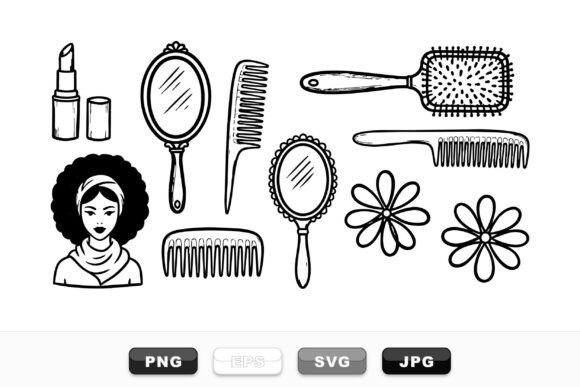
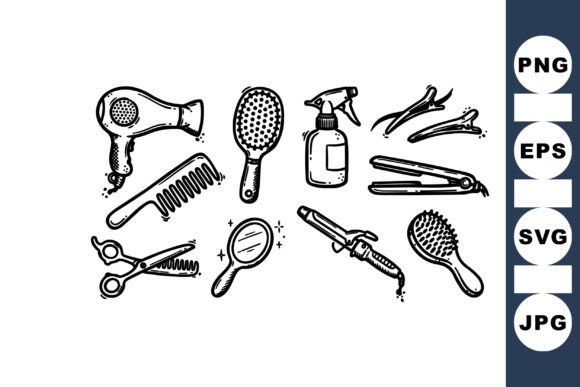
There is a distinct warmth to sketch-style illustration that polished vector art simply cannot replicate. When building a brand identity for a hair salon, spa, or independent stylist, the visual language needs to communicate craftsmanship and personal care. The Hand Drawn Salon Tools Clipart collection captures this essence through organic lines and imperfect details that feel authentically human. Rather than relying on sterile, geometric icons, this set features black and white illustrations of essential hair care tools—including hair dryers, spray bottles, scissors, combs, curling irons, hair clips, brushes, and mirrors—rendered in a loose, artistic sketch style.
This aesthetic choice is deliberate. In an industry saturated with minimalist sans serif logos and generic stock photography, hand-drawn elements signal a return to artisanal quality. For designers and small business owners, these assets serve as more than just decoration; they are foundational design assets that establish tone before a single word of copy is read. The monochromatic palette ensures versatility, allowing these illustrations to integrate seamlessly into existing color schemes without clashing, while the sketch texture adds depth to otherwise flat layouts.
Elevating Brand Perception Through Organic Visuals
The personality of your visual assets directly influences how clients perceive your professionalism and attention to detail. While a clean, modern typeface communicates efficiency, it can sometimes feel clinical in a beauty context. Integrating hand-drawn clipart introduces a layer of approachability and nostalgia that aligns perfectly with the tactile nature of hair care. This is particularly effective for businesses positioning themselves as boutique, vintage-inspired, or eco-conscious.
Consider the psychological impact of a sketchy hair dryer icon versus a solid-fill vector version. The former suggests movement, air, and the active process of styling, whereas the latter often reads as a static symbol. When used in logo design or as supporting graphics on business cards, these illustrations soften the overall composition. They create a visual hierarchy where the handmade elements draw the eye naturally, guiding the viewer through the content with a sense of ease rather than rigid structure. This subtle direction improves audience engagement by making marketing materials feel less like advertisements and more like invitations.
For publishers and content creators in the beauty niche, consistency is key to recognition. Using a cohesive set of hand-drawn tools across blog headers, social media templates, and product packaging creates a unified thread. This visual repetition builds memory structures in the audience’s mind, making the brand instantly recognizable even when the logo isn't present. The black and white nature of this specific collection makes it an ideal companion for both serif font pairings in editorial layouts and script font combinations for elegant pricing lists.
Practical Applications Across Digital and Print Media
Versatility is the primary advantage of having multiple file formats at your disposal. The downloadable ZIP includes SVG, EPS, JPG, and PNG files, each serving a distinct purpose in a professional workflow. Understanding when to deploy each format ensures optimal quality and performance across different mediums.
- SVG and EPS for Scalability: These vector formats are essential for packaging design, large-format signage, and merchandise. Because they are mathematically defined paths rather than pixels, you can scale a sketch-style comb from a 2-inch sticker to a 6-foot window decal without losing edge definition. EPS files remain the industry standard for professional print shops and embroidery digitizing.
- PNG for Digital Transparency: High-resolution PNGs with transparent backgrounds are the workhorse of web design and social media graphics. They allow you to overlay a hand-drawn mirror or scissors directly onto colored backgrounds or photographs without awkward white boxes. This is crucial for creating Instagram stories, Pinterest pins, and website hero images where layering is common.
- JPG for Quick Mockups: While less flexible than vectors, JPGs are useful for rapid prototyping, client presentations, or low-bandwidth environments where file size matters more than transparency.
Beyond standard branding, these illustrations excel in functional design contexts. Think about appointment cards, after-care instruction sheets, or retail shelf talkers. A sketch of a spray bottle next to hydration tips feels more intuitive than a bullet point. In editorial design for magazines or lookbooks, these tools can serve as section dividers or margin notes, breaking up dense text blocks while reinforcing the thematic content. For crafters and hobbyists using cutting machines like Cricut or Silhouette, the SVG files provide clean cut lines for vinyl decals on salon mirrors or custom t-shirts.
Strategic Pairing and Layout Considerations
While the clipart itself is visually strong, its effectiveness depends heavily on what surrounds it. Successful integration requires thoughtful font pairing. Because the illustrations have significant texture and irregularity, they generally pair best with cleaner typography to avoid visual noise.
A classic combination involves using a high-contrast modern typography sans serif for headlines alongside the sketchy icons. The crispness of the type balances the looseness of the drawing, creating a sophisticated tension that feels current yet grounded. Alternatively, for a softer, more romantic aesthetic, a delicate handwritten font can echo the organic lines of the clipart. However, caution is necessary here; if both the text and the image are too erratic, readability suffers. Always test pairings at actual size before finalizing any creative font decisions.
White space is another critical factor. Sketch-style art breathes. Crowding a detailed illustration of a curling iron against heavy text or complex patterns diminishes its charm. Allow adequate padding around each element to let the linework stand out. This negative space also aids in visual processing, making social media graphics easier to scan quickly as users scroll through feeds.
Evaluating Fit and Commercial Usage
Before incorporating Hand Drawn Salon Tools Clipart into a project, assess whether the sketch aesthetic aligns with the brand's core values. This style works exceptionally well for salons emphasizing natural products, personalized service, or heritage techniques. It may be less suitable for ultra-futuristic tech-beauty brands or medical-grade dermatology clinics where precision and sterility are paramount. Context dictates appropriateness.
When reviewing the included styles, look for consistency in stroke weight and shading density across the entire set. A cohesive collection ensures that a hair clip and a hair dryer look like they were drawn by the same hand during the same session. This internal consistency is vital for maintaining a professional appearance in brand identity systems. If one icon is heavily shaded and another is merely an outline, the resulting design will feel disjointed.
Finally, always verify licensing terms for commercial use. While many digital assets are marketed broadly, specific restrictions may apply to resale, redistribution, or trademark registration. For entrepreneurs and agencies, confirming that a commercial font or graphic asset license covers your intended usage protects both you and your client from future legal complications. Proper attribution and adherence to license agreements are hallmarks of professional practice.
Ultimately, the value of this clipart collection lies in its ability to humanize digital and print touchpoints. In a sector driven by personal connection and trust, visuals that feel touched by human hands resonate deeply. Whether you are designing a menu of services, styling a blog post, or creating retail packaging, these black and white sketches offer a timeless, adaptable solution that prioritizes character over perfection. By leveraging the right file formats, respecting visual hierarchy, and pairing thoughtfully with typography, designers can transform simple tool illustrations into powerful communicators of brand ethos.