The Art of the Rough Sketch: Understanding Hand-Drawn Tool Illustrations in Digital Design
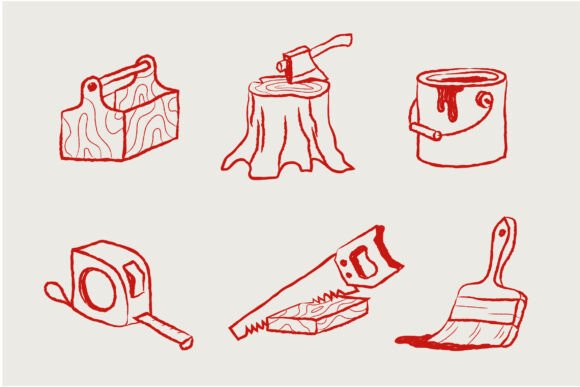
In an era dominated by pixel-perfect vector graphics and hyper-realistic 3D rendering, there is a growing counter-movement that embraces the imperfect, the tactile, and the human. This movement is best exemplified by the resurgence of hand-drawn chalk and charcoal style illustrations depicting creative tools and materials. When we see a digital asset featuring a paint can with rough, sketchy outlines, or a tape measure rendered with the texture of graphite on paper, we are not just looking at a picture of a tool; we are engaging with a specific visual language that communicates authenticity, craftsmanship, and approachability.
For designers, educators, and content creators, understanding this aesthetic is no longer just an artistic choice—it is a strategic communication tool. These illustrations bridge the gap between cold technology and warm human creativity. By exploring the purpose, technical execution, and psychological impact of these rough sketch textures, we can better understand why elements like brushes, saws, and measuring tools continue to resonate so deeply in modern digital spaces.
The Psychology Behind the Handmade Aesthetic
To truly appreciate why hand-drawn tool illustrations work, we must first understand what they represent. In visual communication, clean lines and solid fills often signify precision, corporate stability, and finality. While these traits are valuable, they can also feel sterile or intimidating to beginners. Conversely, the rough sketch texture signifies process, potential, and accessibility.
When a user encounters an illustration of a paint brush that looks like it was drawn with charcoal, several subconscious associations occur:
- Permission to be Imperfect: The wobbly lines suggest that mistakes are part of the creative journey. This lowers the barrier to entry for students and hobbyists.
- Tactile Connection: Chalk and charcoal textures trigger sensory memories of physical art supplies, grounding digital experiences in physical reality.
- Human Presence: Unlike algorithmically generated smoothness, sketch lines imply a human hand was involved, fostering trust and emotional connection.
- Focus on Function: A sketch emphasizes the idea of the tool rather than its commercial branding, keeping the focus on utility and education.
This aesthetic is particularly powerful in educational contexts. When teaching someone how to use a saw or mix paints, a photorealistic image might distract with unnecessary detail or brand logos. A hand-drawn diagram strips away the noise, highlighting only the essential mechanics and safety considerations through expressive line work.
Deconstructing the Visual Vocabulary of Creative Tools
The specific tools chosen for these illustrations carry their own semantic weight. They are rarely selected at random; each represents a different facet of the creative and constructive process. Understanding these symbols helps creators select the right imagery for their specific message.
Paint Cans and Brushes: Expression and Fluidity
In the lexicon of creative tools, paint cans and brushes are the universal symbols of transformation. In a chalk or charcoal style, these items lose their industrial rigidity. The paint dripping from a can becomes a fluid, organic gesture rather than a mess. Brushes are depicted with frayed bristles and dynamic angles, suggesting motion and energy. These illustrations are ideal for content related to artistic expression, interior design, renovation, and personal growth. They tell the viewer that the subject matter is about making something new, not just observing what already exists.
Saws and Measuring Tools: Structure and Precision
While paint represents chaos and creation, saws and tape measures represent order and planning. However, when rendered in a hand-drawn style, they soften the intimidation factor of construction and engineering. A sketch of a tape measure extending across a page suggests measurement without rigidity. It implies that planning is a flexible, iterative process. Saws illustrated with rough cross-hatching emphasize the effort and labor involved in building, honoring the craftsperson’s touch. These elements are crucial for DIY tutorials, architectural concepts, and project management visuals where you want to convey reliability without sacrificing warmth.
Sketch Lines and Construction Marks
Perhaps the most important element in this style is the inclusion of visible construction lines. In traditional drafting, guide lines are erased before the final presentation. In the modern hand-drawn digital aesthetic, these lines are celebrated. Leaving the "sketch lines file" visible in the final output serves a dual purpose. First, it adds depth and texture to the composition. Second, it acts as a meta-commentary on the creative process itself, showing the viewer that the result was built step-by-step. This transparency is invaluable in educational materials, as it demystifies complex tasks.
Technical Execution: Integrating SVG and Texture
A common misunderstanding is that hand-drawn styles cannot be scalable or web-friendly. Many assume that to achieve a charcoal look, one must use heavy raster images like JPEGs or PNGs, which can slow down websites and look pixelated on high-resolution screens. This is where the intersection of traditional art and modern technology shines through Scalable Vector Graphics (SVG).
Modern workflows allow artists to draw physically with chalk or charcoal, scan the artwork, and then trace or vectorize it while retaining the organic edge quality. Alternatively, digital artists use specialized brushes in software like Procreate or Adobe Fresco to create vector-compatible sketch assets. The advantage of using SVG for these rough textures includes:
- Infinite Scalability: Whether displayed on a mobile phone or a billboard, the sketch lines remain crisp and intentional, never blurry.
- Small File Sizes: Optimized SVG code for tool illustrations is often significantly lighter than photographic equivalents, improving site performance and SEO.
- CSS Manipulation: Because they are code-based, the colors of paint cans or the stroke width of sketch lines can be changed instantly via CSS to match brand guidelines or dark mode preferences.
- Animation Potential: SVG paths can be animated to simulate the act of drawing, creating engaging micro-interactions that reinforce the handmade feel.
When implementing these assets, it is vital to maintain the integrity of the texture. Over-smoothing vector nodes can destroy the charm of a charcoal effect. Designers should utilize SVG filters like feTurbulence or feDisplacementMap to add grain and irregularity programmatically if the original scan lacks sufficient detail.
Practical Applications in Modern Contexts
The relevance of hand-drawn tool illustrations extends far beyond art blogs. They have found a significant place in business, technology, and education because they solve specific communication problems.
In User Experience (UX) Design: Onboarding screens often use sketch-style illustrations of tools to guide users. A hand-drawn cursor or pointer feels less demanding than a standard UI arrow. It frames the learning curve as a collaborative workshop rather than a rigid software tutorial.
In Content Marketing: Brands selling physical goods or services use this style to differentiate themselves from generic stock photography. A hardware store using custom charcoal sketches of saws and hammers in their email newsletters creates a distinct brand identity that feels local and expert-driven, adhering to E-E-A-T principles by showcasing genuine industry knowledge through bespoke visuals.
In Education and Training: Textbooks and online courses utilize these illustrations to break up dense text. A diagram of a paint mixing ratio done in a loose sketch style is easier to digest than a clinical chart. It mimics the notes a teacher might draw on a blackboard, leveraging familiar pedagogical cues to enhance retention.
Common Misconceptions and Best Practices
Despite their popularity, there are pitfalls to avoid when working with this aesthetic. One common assumption is that "hand-drawn" means "unprofessional." This is false. High-quality sketch illustrations require a deep understanding of anatomy, perspective, and composition. A poorly executed sketch looks amateurish; a well-executed one looks intentional. Always prioritize clarity over style. If the rough texture obscures the function of the tape measure or the shape of the brush, the illustration has failed its primary purpose.
Another misconception is that this style is only suitable for children. While it is friendly, the hand-drawn tool aesthetic is widely used in high-end architectural firms, boutique agencies, and technical documentation. The key is balancing the roughness of the line work with sophisticated layout and typography. Pairing charcoal illustrations with clean, modern sans-serif type creates a tension that feels contemporary and mature.
Finally, accessibility must not be overlooked. Because these illustrations rely on texture and contrast, ensure that alt text accurately describes both the tool depicted and the stylistic intent. For example, instead of just "saw," use "Hand-drawn charcoal sketch of a crosscut saw demonstrating proper grip technique." This ensures that screen reader users receive the same contextual richness as sighted users.
Conclusion: The Enduring Value of the Human Touch
As our digital environments become increasingly automated and polished, the demand for the raw, textured, and human will only grow. Hand-drawn chalk and charcoal illustrations of creative tools serve as a visual anchor, reminding us that behind every digital interface, every building, and every masterpiece, there is a person with a tool in hand. Whether you are a designer selecting assets for a website, an educator creating course materials, or a business owner crafting a brand identity, embracing the rough sketch texture is more than an aesthetic preference. It is a commitment to authenticity, clarity, and the enduring spirit of making. By understanding the nuance of these illustrations—from the symbolism of the paint can to the technical advantages of SVG—you equip yourself with a powerful tool for meaningful communication in the modern world.