Evaluating Mandala Brush Art: A Practical Guide for Digital Crafting and Design
When selecting digital assets for creative projects, the distinction between generic ornamentation and purpose-built design often determines the success of the final product. Mandala Brush Art represents a specific intersection of traditional symmetry and thematic illustration that differs significantly from standard geometric patterns or floral vectors. This style integrates the recognizable structure of a mandala with the distinct visual language of paint brushes, artistic tools, and fluid swirls. For crafters, designers, and DIY enthusiasts aged 20 to 50, understanding the functional differences between this niche aesthetic and broader alternatives is essential for making informed purchasing and creation decisions.
Unlike abstract dot work or purely religious iconography, Mandala Brush Art serves a dual purpose. It functions as a decorative border or centerpiece while simultaneously signaling a theme of creativity, artistry, and boho elegance. This dality makes it a strategic choice for specific applications where standard mandalas might feel too spiritual or too rigid. Evaluating this design format requires looking beyond aesthetics to consider technical compatibility, material suitability, and the specific message the artwork conveys in contexts like apparel, wall decor, and branding.
Distinguishing Features Against Standard Geometric Patterns
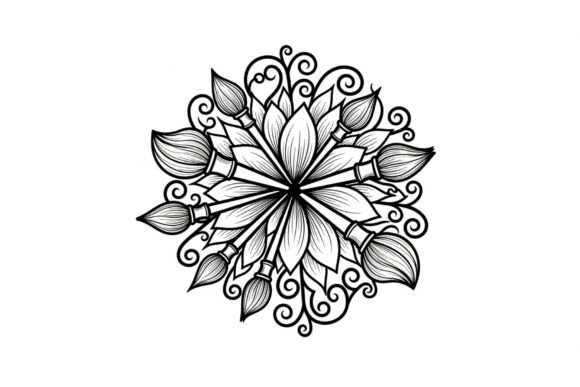
The primary decision factor when choosing Mandala Brush Art over conventional alternatives lies in its narrative quality. Traditional mandalas rely heavily on mathematical precision, dots, and repetitive petals. While visually striking, they can sometimes lack contextual relevance for secular or hobbyist projects. In contrast, the brush-inspired variant incorporates organic shapes that mimic bristles, palettes, and ink splashes within the symmetrical framework.
This distinction matters practically. If you are creating merchandise for an art supply store, a tattoo artist’s portfolio, or a creative workshop flyer, a standard geometric mandala may require additional text or icons to establish context. Mandala Brush Art communicates the "art" theme intrinsically through its form. However, if the goal is strictly meditative coloring or cultural appreciation, the stylized nature of brush art may be less appropriate than authentic, traditional designs. The tradeoff here is between thematic specificity and universal neutrality.
Technical Suitability for Laser Cutting vs. Print Media
A critical evaluation point for any SVG design is its performance across different fabrication methods. Mandala Brush Art typically features varying line weights and intricate negative space, which presents unique challenges and advantages compared to simpler silhouettes.
- Laser Cutting Considerations: The inclusion of fine details like brush bristles and delicate swirls requires careful assessment of material thickness. On wood or acrylic, these intricate sections can become fragile or burn excessively if the vector nodes are not optimized. Unlike bold, chunky mandalas designed specifically for laser etching, brush art often requires test cuts to ensure structural integrity. It excels in engraving but demands caution during full cut-through operations.
- Vinyl and Heat Transfer: For Cricut and Silhouette users, the complexity of brush art dictates the minimum size. Intricate inner petals and tool motifs may weed poorly at small scales. Compared to solid-fill boho rainbows or simple line art, this style is better suited for medium-to-large applications like t-shirt backs, tote bags, or wall decals rather than small sticker accents.
- Print Resolution: Because this artwork is provided in clean vector formats (SVG, EPS, DXF), it outperforms raster-based alternatives for large-format printing. When comparing options for wall art or canvas prints, vector-based Mandala Brush Art ensures crisp edges at any scale, whereas downloaded JPEGs from general image sites often pixelate when enlarged beyond standard letter size.
Format Versatility and Software Compatibility
When evaluating digital design resources, file flexibility is as important as visual appeal. Professional-grade Mandala Brush Art packages typically include a comprehensive suite of formats: SVG, PNG, JPG, EPS, and DXF. Understanding when to use each prevents workflow bottlenecks that often occur with single-format downloads.
For users of Cricut Design Space or Silhouette Studio, the SVG file is the industry standard because it preserves individual layers and allows for color separation without quality loss. However, professionals using Adobe Illustrator or CorelDRAW should prioritize the EPS file, which maintains editable anchor points and bezier curves for customization. The DXF format serves as a crucial bridge for older cutting machines or specialized CAD software that cannot parse modern SVG tags. Meanwhile, high-resolution PNGs with transparent backgrounds offer immediate utility for non-designers using Canva or word processors for invitations and social media graphics.
Comparatively, free resources found on open repositories often lack this breadth. They may provide only a flattened JPG or a poorly traced SVG with merged layers. Investing in a properly formatted Mandala Brush Art bundle reduces the time spent cleaning up jagged edges or redrawing missing elements, offering a higher return on time invested despite the initial cost.
Evaluating Fit for Specific Creative Niches
Not every project benefits from the same artistic style. Determining whether Mandala Brush Art is the correct solution involves matching the design’s inherent characteristics to the end-use case.
Ideal Use Cases:
- Art-Themed Apparel: T-shirts and aprons for painters, teachers, and students benefit from the literal interpretation of brushes within the mandala.
- Boho Home Decor: The blend of ornamental geometry and organic flow fits seamlessly with eclectic, bohemian, or studio interior aesthetics.
- Adult Coloring Books: The varied line weights and mix of representational and abstract elements provide engaging complexity for colorists seeking more than repetitive patterns.
- Tattoo Stencils: The black-and-white contrast and balanced composition make excellent starting points for custom tattoo flash, particularly for clients wanting art-related symbolism.
Less Suitable Alternatives:
- Minimalist Branding: If a brand identity requires ultra-clean, sparse lines, the density of Mandala Brush Art may appear cluttered. Simple line-art logos would be a superior alternative.
- Kids’ Crafts: The intricacy that appeals to adults can frustrate younger children. Bold, thick-lined cartoon mandalas are generally safer for elementary-aged projects.
- Cultural Ceremonies: If the intent is respectful cultural representation, stylized commercial brush art should be avoided in favor of historically accurate designs created by practitioners of that tradition.
Making the Final Selection Decision
Ultimately, choosing Mandala Brush Art is a balance between aesthetic preference and technical reality. It offers a sophisticated alternative to basic geometric patterns for users who need their decor to communicate a specific passion for creativity. The key decision factors should be the intended output method and the audience's expectations.
If your priority is speed and simplicity for small vinyl stickers, a less detailed boho shape may serve you better. However, if you require a versatile, scalable asset that bridges the gap between ornamental beauty and thematic relevance for adult audiences, Mandala Brush Art provides significant value. Always verify that the specific file you select includes the necessary vector formats for your software and that the level of detail matches your fabrication equipment’s capabilities. By weighing these practical considerations against visual appeal, you ensure the selected artwork enhances rather than complicates your creative process.
When comparing multiple listings, look for previews that show the design applied to real-world objects rather than just flat digital renders. This helps visualize how the intricate brush details translate to physical media. Additionally, check licensing terms carefully; while personal use is standard, commercial application for selling finished goods often requires specific permissions. A well-chosen Mandala Brush Art asset is an investment in professional-quality results, provided it aligns with both your technical constraints and your artistic vision.