Evaluating the Cyan Blue Orchid Meadow Floral Pattern for Professional Design
In the saturated market of digital surface design, finding assets that balance artistic authenticity with technical precision is a persistent challenge for creative professionals. The Cyan Blue Orchid Meadow Floral Pattern distinguishes itself by prioritizing handcrafted texture over algorithmic generation. This seamless pattern is not merely a collection of vector shapes but a raster illustration created entirely in Procreate using professional dry ink brushes. For designers, textile printers, and product creators, this distinction matters significantly. It offers a quiet luxury aesthetic that avoids the sterile perfection often associated with digital florals, providing instead a grainy, organic depth that translates exceptionally well to physical media.
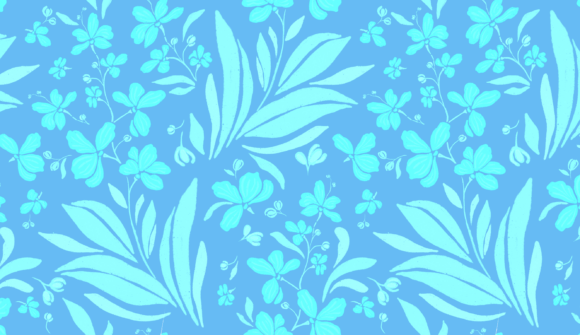
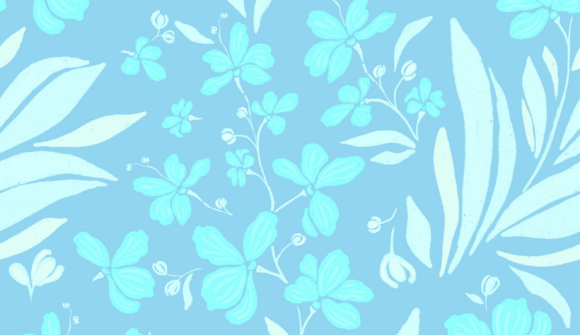
The value of this asset lies in its specific execution. While many floral patterns rely on high-saturation gradients or flat vector fills, this design utilizes a restrained palette of delicate cyan and pale blue orchids with soft white highlights against a serene blue background. This color grading is intentional, catering to current interior design and fashion trends that favor calming, biophilic aesthetics without overwhelming visual noise. When evaluating this resource for commercial or personal projects, it is essential to understand both its artistic merits and its technical specifications to determine if it aligns with your production workflow and quality standards.
Artistic Integrity and Texture Analysis
The primary strength of the Cyan Blue Orchid Meadow Floral Pattern is its retention of traditional media characteristics within a digital format. The use of dry ink brushes in Procreate creates a tactile quality that mimics charcoal or lithography. In practical application, this grainy texture serves a functional purpose beyond aesthetics. When printed on fabric or paper, pure digital lines can sometimes appear artificial or pixelated at close range. The inherent noise and texture in this hand-drawn file help to mask minor printing inconsistencies and blend ink into substrates more naturally.
This texture also contributes to the "quiet luxury" positioning of the design. Luxury in surface pattern design is often communicated through subtlety and evidence of human touch. The variation in line weight and the imperfect edges of the orchid petals suggest an artist's hand rather than a automated script. For brands building an identity around craftsmanship, sustainability, or artisanal quality, this visual language supports the narrative more effectively than generic stock vectors. However, users should note that this textured approach means the file is resolution-dependent. Unlike scalable vectors, the detail is baked into the pixel data, requiring careful handling during resizing to preserve the integrity of the dry ink effect.
Technical Specifications and Production Readiness
For professional output, technical reliability is as critical as visual appeal. This pattern is supplied at 3600 x 3600 pixels, which equates to a 12x12 inch square at 300 DPI. This resolution is the industry standard for high-quality textile printing and wallpaper manufacturing. At this size, the repeat is large enough to showcase the meadow composition without becoming repetitive too quickly, yet manageable for most RIP software and home printers used in prototyping.
The inclusion of both PNG and JPEG formats addresses distinct workflow needs:
- Seamless PNG: This file preserves the exact fidelity of the original dry ink texture. It is the preferred master file for archival purposes and for any editing that requires transparency or layer manipulation. Because PNG uses lossless compression, no artifacting is introduced, ensuring the grainy texture remains crisp.
- Seamless JPEG: Optimized for immediate production use, this 300 DPI file offers a smaller footprint for faster uploading to print-on-demand platforms or sharing with manufacturers. While JPEG is lossy, a high-quality export at this resolution typically retains sufficient detail for end-use products where the substrate texture (like linen or matte paper) will interact with the image.
Users integrating this into sublimation workflows or direct-to-garment (DTG) printing will find the cyan and blue palette particularly forgiving. These cool tones generally reproduce well across various color profiles, though soft proofing is always recommended to ensure the pale blue highlights do not get lost on darker or uncoated substrates.
Practical Applications and Use Cases
The versatility of the Cyan Blue Orchid Meadow Floral Pattern extends across multiple disciplines, provided the project calls for a serene, organic aesthetic. Its specific colorway and scale make it uniquely suited for several professional applications:
Textile and Apparel Design
The meadow layout, featuring scattered orchids rather than a rigid grid, lends itself beautifully to garment construction. The non-directional nature of the seamless repeat allows for efficient fabric utilization during cutting, reducing waste—a key consideration for sustainable fashion labels. The pattern works effectively on flowing fabrics like silk, viscose, or lightweight cotton, where the drape enhances the organic feel of the illustration. It is less suitable for structured tailoring where geometric precision is required, but ideal for resort wear, loungewear, and accessories like scarves or tote bags.
Interior Surfaces and Wallpaper
In interior design, the serene blue background acts as a neutral anchor, allowing the cyan orchids to provide interest without dominating a room. This makes the pattern appropriate for feature walls in bedrooms, bathrooms, or wellness spaces where a calming atmosphere is paramount. The 12-inch repeat scale is substantial enough to be visible from a distance but detailed enough to reward closer inspection. For wallpaper designers, the hand-drawn texture helps mitigate the "plastic" look that can plague digital prints on vinyl, creating a finish that resembles traditional block-printed paper.
Packaging and Stationery
For luxury gift wrap, greeting cards, and book covers, the quiet elegance of this pattern communicates premium value. The low-contrast relationship between the pale blue elements and the cyan background ensures that overlaid typography remains legible. This is a common failure point in floral patterns where busy backgrounds compete with text; here, the negative space is managed thoughtfully to support functional design elements.
Audience Fit and Strategic Considerations
While visually appealing, the Cyan Blue Orchid Meadow Floral Pattern is not a universal solution. Understanding who benefits most from this asset prevents misalignment between resource and project goals.
Ideal Users: Surface pattern designers seeking high-quality base layers, independent fashion designers focusing on slow fashion, stationery brands targeting the wedding or wellness markets, and POD sellers looking to differentiate their catalog with non-AI-generated art. Educators and content creators in the arts may also find value in using this as a case study for discussing texture, color harmony, and seamless repeating in digital illustration courses.
Limitations and Constraints: Designers requiring infinite scalability for large-format signage or vehicle wraps should look elsewhere, as the 3600px limit will result in pixelation when stretched beyond 12 inches at print resolution. Additionally, those seeking vibrant, high-contrast, or neon aesthetics will find this palette too subdued. The hand-drawn nature also means that modifying individual elements (such as moving a single flower) is difficult compared to vector-based patterns; users are essentially working with a flattened composition.
From a licensing and ethical standpoint, the emphasis on "hand-drawn in Procreate" provides assurance regarding intellectual property. In an era where AI-generated patterns are flooding marketplaces with questionable copyright status, verified human-created assets offer legal safety and brand authenticity. For businesses where provenance matters, this attribute adds tangible long-term value beyond the immediate visual utility.
Workflow Integration and Best Practices
To maximize the return on this asset, professionals should adopt specific handling protocols. Always retain the original PNG as your master file. If you need to adjust the color balance to match a specific Pantone reference or fabric dye lot, perform these adjustments on the PNG to avoid generational quality loss associated with re-saving JPEGs.
When preparing files for professional fabric printing, request a strike-off or test swatch specifically to evaluate how the dry ink texture interacts with your chosen material. On smooth silks, the grain may appear sharper; on textured linens, it may soften further. Both outcomes are valid, but they produce different emotional responses. Testing ensures the final product matches the intended quiet luxury aesthetic.
Finally, consider the context of the end user. The Cyan Blue Orchid Meadow Floral Pattern succeeds because it respects the viewer’s need for visual rest. In a digital landscape characterized by maximum saturation and complexity, this design offers a sophisticated alternative. Whether used for a limited-edition capsule collection or a bespoke interior project, its effectiveness relies on allowing the handcrafted details to breathe. Over-processing, excessive color correction, or cluttered overlays will diminish the very qualities that make this pattern a worthwhile investment for serious creative work.